Do You Really Need To “Learn AI”?
 Written by Akhil Raj Gupta
(Full disclosure: I have a massive bias i.e. I sell AI training and education. This is also the most honest and reflective writing that I’ve done this year)
It all started very innocuously.
“What do you mean do you really need to learn AI? Of course you do! It’s the ONLY skill that matters in the 21st century.”
I looked up from my phone, half expecting my companion to be joking. He wasn’t.
Taking a languid sip of his coconut latte he replied coolly -
“Sure, but I mean does it really need to be learned as its own thing? Can’t I just talk to it and figure it out? Especially stuff like Instinct. It’s just so…easy”
“Yes, but Instinct isn’t even the tip of the iceberg in terms of what AI can do. There are no skills, artifacts, custom tools, context management or anything with depth”
“Okay. But who really needs all that?”
Before I could reply, he smirked and followed it up with -
“Just something worth thinking about. Especially since you sell courses.”
Since yesterday, I have replayed that conversation in my head several times.
Glibness aside, there is a very real question here that’s worth addressing. And the answer is almost certainly less straightforward than either of us had argued.
Here’s what we know -
- For 99.9% of the world, “learning AI” is just “learning how to use AI”. Unless you’re building AI products, that’s all you should care about. It’s great news, because it’s much more accessible and takes far less time (we cover everything you need to know in 28 days in our flagship cohort)
- The products themselves will become easier and more intuitive to use. 6 months ago, scraping a website with OpenClaw was a “sellable skill” - today it’s table stakes.
- Becoming exceptional at AI now is harder and more valuable - you need a deeper understanding of the underlying systems to make that happen.
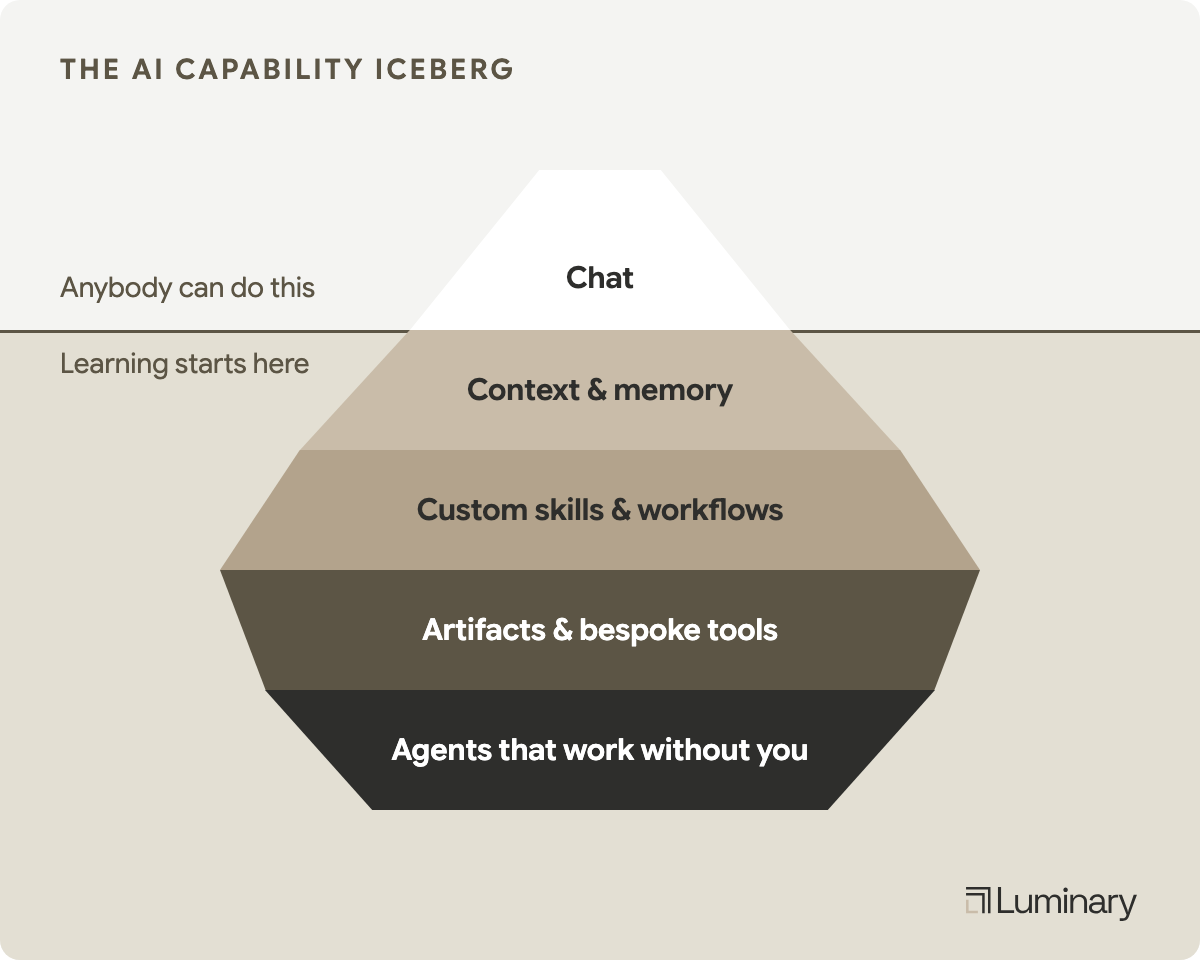
As things stand, I believe that for a lot of people and jobs, the product improvements themselves may represent enough of a step change. Your mission then is just learn AI by using AI a lot, and you’ll likely get incrementally better over time (at least enough for what you want). If you’re confused by the interface, a couple of YouTube videos or the Anthropic Academy are more than enough.
As someone who sells AI courses that go deep, that’s a bittersweet realization because our “TAM” feels smaller (oh no, it’s not “every single adult” like we originally thought) and yet, the people who do invest money and time with us now have reason to demand more craft and tangible ROI, which is exactly where we know we excel.
For 99.9% of the world, “learning AI” is just “learning how to use AI”. Unless you’re building AI products, that’s all you should care about. It’s great news, because it’s much more accessible and takes far less time.
So that leaves us with two questions - Firstly, what’s actually there to learn (and what does it give us beyond just talking to AI?) as well as who should invest genuine time and effort into it?
One thing is for sure - operating at the bleeding edge of AI adoption makes you capable beyond your wildest imagination.
I’m a non engineer first-time founder who stood up a profitable company in 45 days - I build products, run webinars & courses, consult for companies, create content, and manage a team. I say this not to brag, but as proof over promise.
As I write this, here’s what my screen looks like -
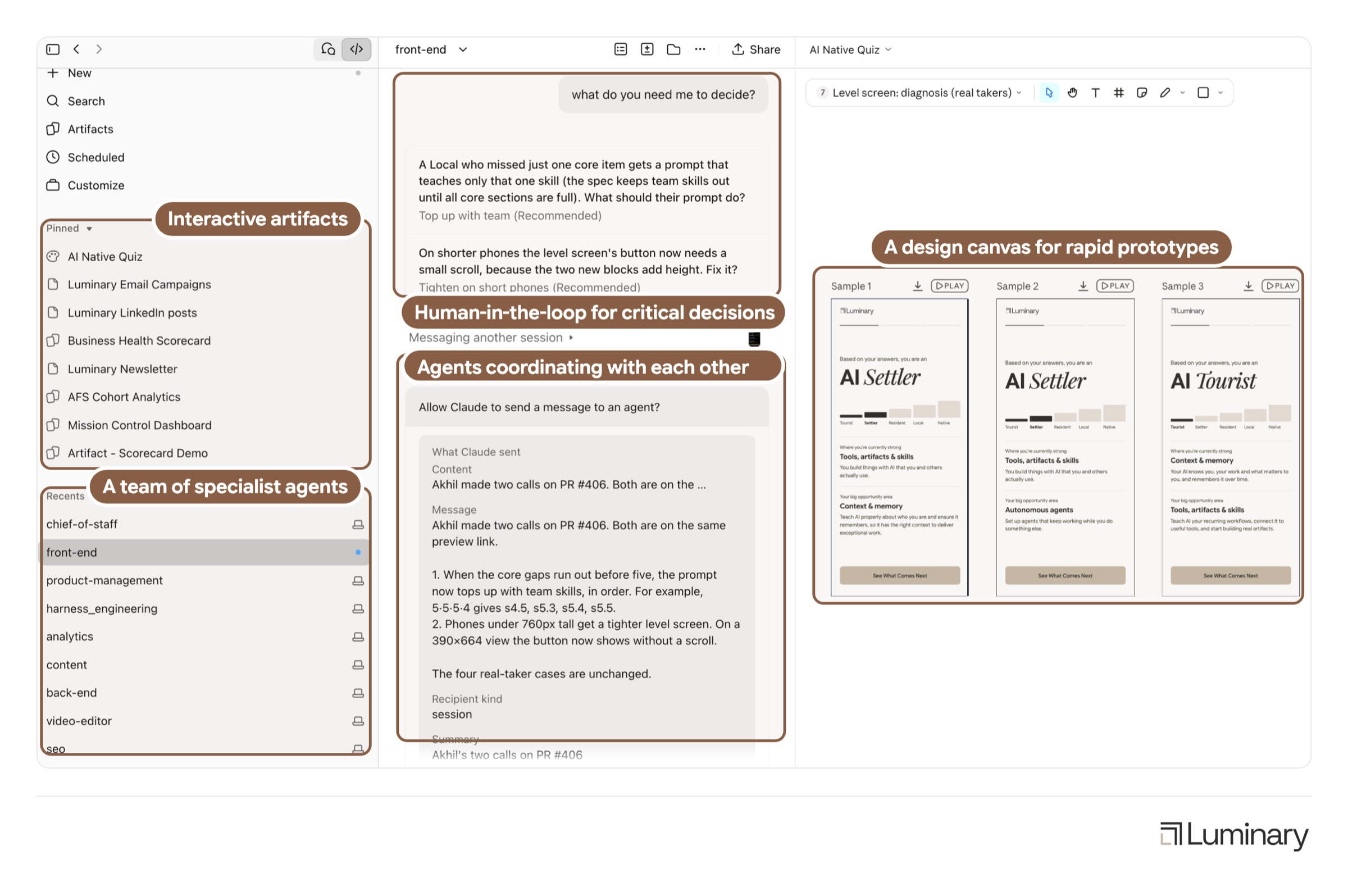
There’s a lot happening under the hood here that’s beyond the scope of this essay. None of it came out of the box though. It has taken many months of painstaking trial and error to build. I still spend several hours a week on my own AI stack.
Operating at the bleeding edge of AI adoption makes you capable beyond your wildest imagination.
Looking ahead, I think people will fall into two categories -
- Those who use AI to do their existing job a bit better. Writing, research, planning, the odd deck. For you, the products will keep doing more of the heavy lifting every month. Use them a lot, stay curious, and you’ll be fine without a course (including mine).
- Those who want AI to completely transform what they’re capable of. You want it to know your work, run parts of it without you, and build things you couldn’t build alone. That doesn’t come from chatting. It comes from understanding every part of the system, and it’s worth real time and effort, because the gap between you and everyone else keeps widening.
Action item for you - think deeply about which of the 2 categories above represents you more and plan your next move accordingly. If you’re in the latter and want to see where you stand, you can take our free AI assessment here.
Akhil