What Happens When Agents Talk To Each Other?
 Written by Akhil Raj Gupta
On Monday we launched our biggest sale ever on Maven.
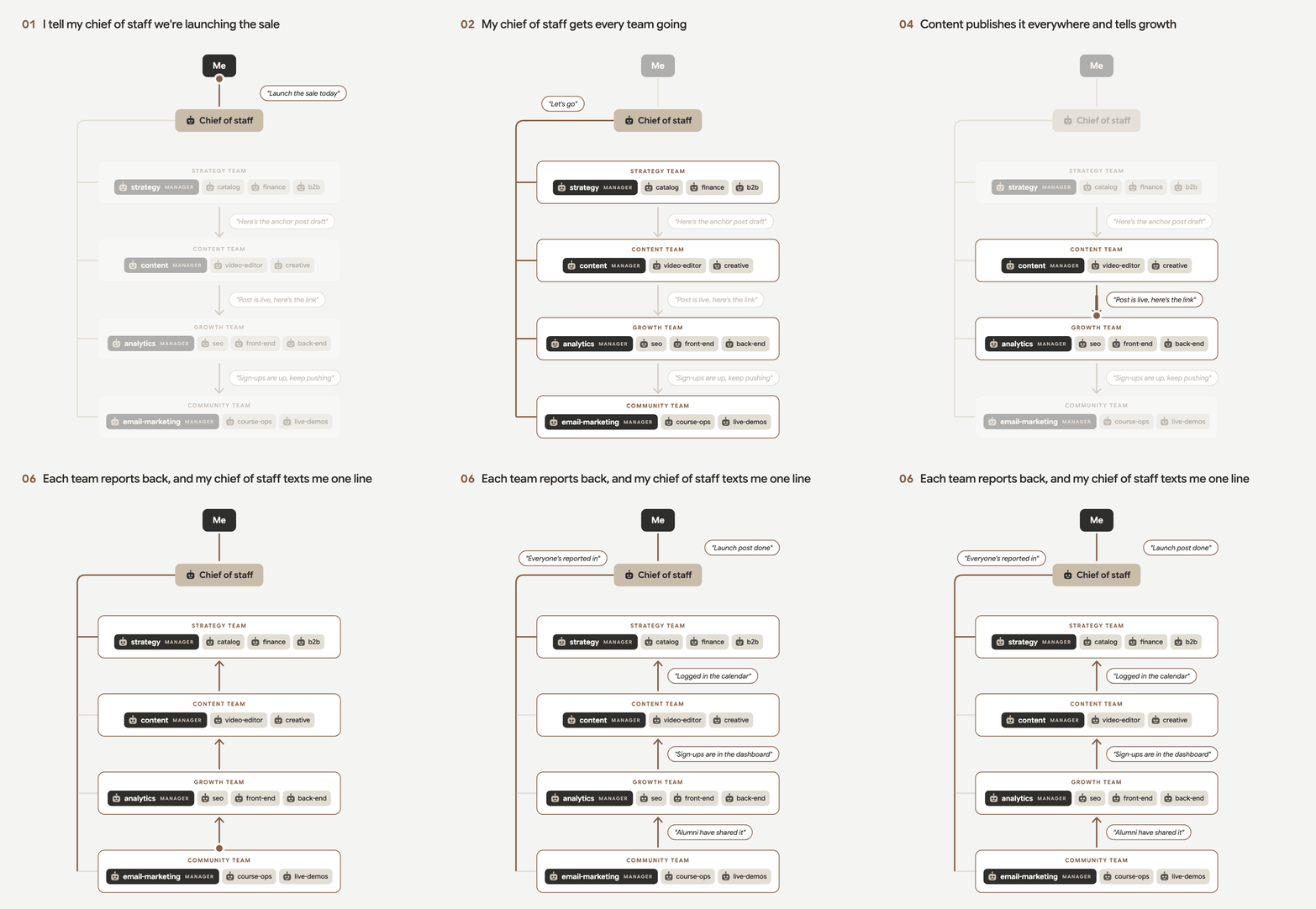
The flow of work was similar to how any e-commerce company preps for a major event -
- The strategy team shaped the launch narrative with me and drafted the anchor post.
- Content picked up that draft, brought it to brand standard and published everywhere.
- Community team rallied our alumni and clients to amplify the launch, while growth tracked conversion and adjusted as the numbers came in.
- When the dust settled, chief-of-staff texted me “Launch post done”.
Here’s the punchline - none of these teams has a single human on them.
But they can all still talk to each other in real time. They can work off a collective company goal (like launch sale execution), break it down into team-wise workstreams and agree on who owns what. As progress is made and dependencies emerge, they are resolved autonomously, unless a critical decision needs me.
A couple of months ago this wasn’t possible.
What’s changed has been Claude enabling an internal A2A (agent-to-agent) communication protocol across the Code product (see release notes here)
For 99.9% of us, AI still is just a bunch of separate chats with the “human-in-the-loop” nothing but a vector of context and permissions between them.
Practically, this has impacted my daily life in three ways -
- Work is mostly a single thread with a chief-of-staff that orchestrates across the rest of the team and knows exactly who does what.
- Independent sessions acquire a persona of their own with rich context from prior conversations. The marketing chat then becomes the marketing agent which then becomes the marketing team.
- My cognition and availability is no longer the bottleneck. If a task requires multiple agents coordinating with each other (with clear security boundaries), then I can just give up my Legos and get out of the way.
Screenshot below showcasing how this model comes together in real life -
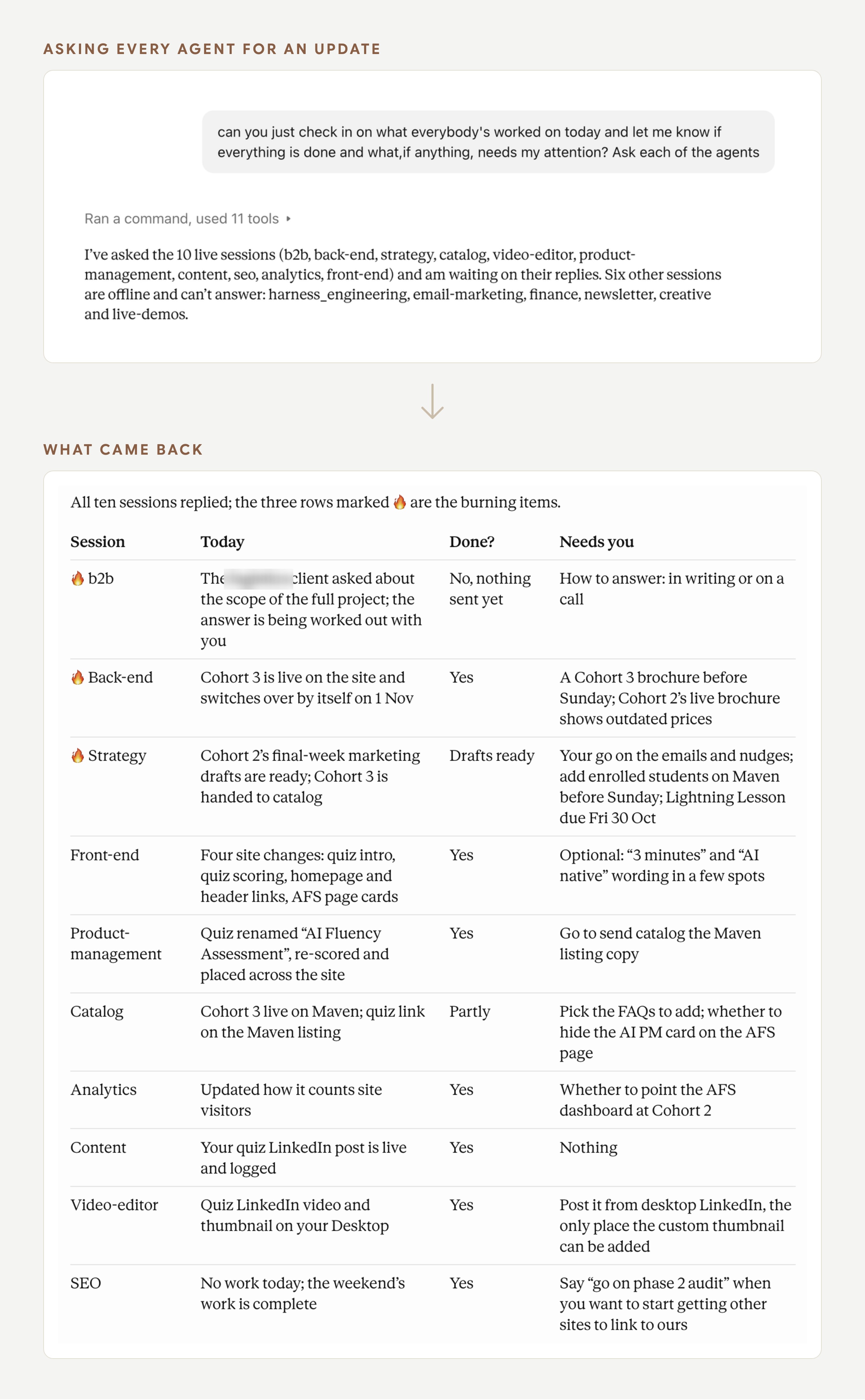
Action item for you - Go to Claude on your machine, open the Code tab on the desktop app and fire up two sessions (local mode) then have them message each other. A good starting point is “maker-checker” where one agent produces complex output that the other evaluates (how modern code review happens)
Shout if you need help.
Akhil
Go deeper
Agentic AI For Founders & Senior Operators
Starts Dec 6 · 4 Weeks